In less than 24 hours I will go to my new village. Pronounced "GO-nay", spelled "Gone", I leave at 3 pm tomorrow.
I always tell myself that I must stop comparing Zambia to Madagascar, but I've come to accept that the comparisons will always be there, I just have to accept all that Zambia is, for better or for worse.
I've been here for about a month and a half and the only real accomplishment (other than maintaining my health and sanity) has been to pass my language test with fewer than 65 hours of training. With that in the past, I was considered prepared to go to my village. But Peace Corps Zambia kept us behind all of the other trainees that we had joined so that we could meet the volunteers that have been in country for one year... All of the volunteers with whom we will return to the States.
As for my village life here in Zambia, I will be about 30 km from a nicer city and the provincial bunk house for Peace Corps Volunteers. I'll be about 8 km from paved roads and will have some cell phone service. All of which would be considered general improvements from my location in Madagascar. I bring with my a small duffel bag and some odds and ends that Peace Corps Zambia has given me, everything else that was left behind will be shipped to the States. So, life is beginning to begin again.
I apologize for the brevity of this post and the delay between posts, but as life returns to some sort of normal, things should fall into place and general life pace will calm. As for now, my health is teetering, and my sanity is improving. But altogether, things are looking up. I send everyone my best, and remind you that there's always a place to stay in Zambia.
See you soon!
Marshall
Sunday, May 10, 2009


Tuesday, March 24, 2009
Beginning Once More
We left the United States on the 22nd of February, headed for Madagascar. On a plane with 31 other volunteers I sat next to a friendly old Zambian man. We talked for a little while; he recounted his adventures in the States and I told of my plans and excitement for Madagascar. Just before exiting the plane and going our separate ways, the kind old man gave me a 1000 Zambian Kwacha bill. I stuffed the strange play-like money into my pocket, at the time I didn’t realize it was an omen.
The prospect was greeted with excitement and anxiety when the head of our ‘Transition Team’ told me I had been accepted to the Zambian Program ‘Linking Income, Food, and Environment (LIFE)’. It’s a great environment program of which I am pleased to be a part.
We’ll be saying goodbye to our quaint bed and breakfast before the end of the day on Friday. And we’ll join a group that is half-way through their training in Zambia. In all, I will have around 4 weeks of training in the language of Nyanja, a Zulu-like dialect of the Malawian Chichewa language. Then I’ll head to the eastern border, 2 hours from Malawi and a short drive from South Luangwa National Park, “…one of the greatest wildlife sanctuaries in the world.” I will spend a little over one year working with local farmers to introduce sustainable agricultural practices.
It will be no Madagascar, as Madagascar was no Zambia. But with a small symbol of Zambian hospitality in my pocket, I venture into my new life transition and I’m sure I’ll find a Xanadu in Zambia.
The prospect was greeted with excitement and anxiety when the head of our ‘Transition Team’ told me I had been accepted to the Zambian Program ‘Linking Income, Food, and Environment (LIFE)’. It’s a great environment program of which I am pleased to be a part.
We’ll be saying goodbye to our quaint bed and breakfast before the end of the day on Friday. And we’ll join a group that is half-way through their training in Zambia. In all, I will have around 4 weeks of training in the language of Nyanja, a Zulu-like dialect of the Malawian Chichewa language. Then I’ll head to the eastern border, 2 hours from Malawi and a short drive from South Luangwa National Park, “…one of the greatest wildlife sanctuaries in the world.” I will spend a little over one year working with local farmers to introduce sustainable agricultural practices.
It will be no Madagascar, as Madagascar was no Zambia. But with a small symbol of Zambian hospitality in my pocket, I venture into my new life transition and I’m sure I’ll find a Xanadu in Zambia.
Saturday, March 21, 2009
The Unshared Tears
First coming to Madagascar, the Peace Corps kept us on a tight leash, we didn’t speak the language or know the ropes in anyway, shape or form. But the first time they loosened their grip, we all went out to eat. It was a fine restaurant, as western as it could be, but only now do I realize the irony of it all: the name of the restaurant was Coup d’Etat.
And now, after 6 days of a perverse house arrest at the Garden Court hotel in South Africa, I’m wishing more than ever that the coup d’etat of Madagascar had never happened.
The violence started on January 26th, 30 some dead in Antananarivo (Tana); and I didn’t hear about it until February 4th, the last day I spent in Belitsaka. From there I consolidated with Austin for two weeks before flying to Tana. We stayed at the Peace Corps training center (a semi-glorified summer camp) for a few days until things had calmed down and most people returned to their villages. Belitsaka was unfortunately too far away, I didn’t have time to return before the training for new volunteers was to begin. I was left in limbo, wanting only to return to the friends and family that had taken me in for the last year… but it was too far. We planned the training, creating lesson plans, technical books, CDs, moving beds, buying food for hundreds of meals. It was the day before the new trainees were supposed to come that the training was cancelled. But we held strong, worked hard to make the training replicable for the possible chance that they would still arrive, just later in the year. None of us could have anticipated the text message that would change our lives. “…Decision made to suspend PC Madagascar. Very sad. Process of leaving will be lengthy. Prepare tonight for consolidation and onward as flights are confirmed…” We’d be leaving Madagascar. Sure, during consolidation we all imagined the possibilities of an evacuation, dreaming of seeing family and friends, returning to a culture familiar to us; it wasn’t an awful prospect. Until it happened. We were devastated. And now there was no way to say goodbye to my family and friends of Madagascar, no cell phone service, no postal service, and it was just too far away.
We left Tana within the week. I was on the second plane to South Africa, and now I’ve been in this hotel compound for a week; Johannesburg is too dangerous to go anywhere other than the airport and the mall.
I’ve since been exploring my options, and I’ve made the first few cuts for a direct transfer of service to another country. It looks as though Zambia may be in the cards. If that doesn’t work out, I’ll be following some leads in Tanzania.
A few months ago, I closed saying “…I will always be on the outside, peering in; looking for some sort of recognition in the eyes of an ancestral way of life that will never be mine.” Looking back, this wasn’t true at all. I had been accepted with open arms into a way of life that I made mine. And now, occupied by memories of a simpler existence, complex ancestral beliefs and the beauty of everyone that crossed my path, I move on. The beginning has come to an end and despite the unfinished goodbyes and the unshed tears, I’ll always look back to My Madagascar with a smile on my face and an unshared tear in my eye.
And now, after 6 days of a perverse house arrest at the Garden Court hotel in South Africa, I’m wishing more than ever that the coup d’etat of Madagascar had never happened.
The violence started on January 26th, 30 some dead in Antananarivo (Tana); and I didn’t hear about it until February 4th, the last day I spent in Belitsaka. From there I consolidated with Austin for two weeks before flying to Tana. We stayed at the Peace Corps training center (a semi-glorified summer camp) for a few days until things had calmed down and most people returned to their villages. Belitsaka was unfortunately too far away, I didn’t have time to return before the training for new volunteers was to begin. I was left in limbo, wanting only to return to the friends and family that had taken me in for the last year… but it was too far. We planned the training, creating lesson plans, technical books, CDs, moving beds, buying food for hundreds of meals. It was the day before the new trainees were supposed to come that the training was cancelled. But we held strong, worked hard to make the training replicable for the possible chance that they would still arrive, just later in the year. None of us could have anticipated the text message that would change our lives. “…Decision made to suspend PC Madagascar. Very sad. Process of leaving will be lengthy. Prepare tonight for consolidation and onward as flights are confirmed…” We’d be leaving Madagascar. Sure, during consolidation we all imagined the possibilities of an evacuation, dreaming of seeing family and friends, returning to a culture familiar to us; it wasn’t an awful prospect. Until it happened. We were devastated. And now there was no way to say goodbye to my family and friends of Madagascar, no cell phone service, no postal service, and it was just too far away.
We left Tana within the week. I was on the second plane to South Africa, and now I’ve been in this hotel compound for a week; Johannesburg is too dangerous to go anywhere other than the airport and the mall.
I’ve since been exploring my options, and I’ve made the first few cuts for a direct transfer of service to another country. It looks as though Zambia may be in the cards. If that doesn’t work out, I’ll be following some leads in Tanzania.
A few months ago, I closed saying “…I will always be on the outside, peering in; looking for some sort of recognition in the eyes of an ancestral way of life that will never be mine.” Looking back, this wasn’t true at all. I had been accepted with open arms into a way of life that I made mine. And now, occupied by memories of a simpler existence, complex ancestral beliefs and the beauty of everyone that crossed my path, I move on. The beginning has come to an end and despite the unfinished goodbyes and the unshed tears, I’ll always look back to My Madagascar with a smile on my face and an unshared tear in my eye.
Sunday, February 22, 2009
Photos
I should have had these here a long time ago... They date back to Feb 2008.
Family Photo: Christmas 2008

Christmas Tree 2008

Post Treeplanting Party Picture

Her name means "sweet"

This is my house. I live in the half closest to you. That solar panel on my roof powers my only way to reach the outside world... a CB Radio.

The gasy guitar still isn't finished (no strings).


Post Treeplanting Party Picture

Her name means "sweet"

This is my house. I live in the half closest to you. That solar panel on my roof powers my only way to reach the outside world... a CB Radio.

The gasy guitar still isn't finished (no strings).

His name means "the cause of happiness".

On our way back from the caves... Carrying cow meat (dinner).


On our way back from the caves... Carrying cow meat (dinner).

Tsingy (the rocks). Bridge.

My name in Malagasy. "mareesalee".

In the caves... People used to live here.

They'll meet in the middle in a few million years.

His name is Tanio. He calls me "salee".
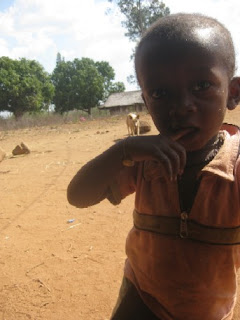
Do you think he's pondering the inner workings of that solar-powered battery charger?

Cows, grazing in the rice fields post harvest.


Neighborhood Kids

Neighbor Family & Relatives

Language Training Group on the day it all began.


My name in Malagasy. "mareesalee".

In the caves... People used to live here.

They'll meet in the middle in a few million years.

His name is Tanio. He calls me "salee".

Do you think he's pondering the inner workings of that solar-powered battery charger?

Cows, grazing in the rice fields post harvest.

Dancing and Gasy guitars...

Special ceremonies call for special meals.

Neighborhood Kids

Neighbor Family & Relatives

Language Training Group on the day it all began.

I'll try to update with more in the near future. Please give feedback, I significantly reduced the quality... does that interfere with viewing pleasure? I could try to make them a little bigger. Things are great here. Calm. I'm sorry I didn't send any updates during the political crisis... it's still not over. If you curious google madagascar news.
I send you all my best.
Take Care,
Marshall
Monday, January 19, 2009
Fanafody Gasy
The sky was mostly clear with a few clouds spotting the horizon and our guide, Longhead’s Uncle (Zama’ny Lavaloha), uprooted a patch of grass, turned it up side down and stuffed it leafy part first into an unsuspecting termite mound. He said that this would stop the rain. Two hours later a huge storm cloud appeared out of nowhere and we were soaked to the bone. I thought, down one Fanafody Gasy.
The rain had stopped but the dense forest cover above was still dripping as we left the cave and headed back to camp. I was taking my time enjoying the quiet calm after the storm as I was stung by some sort of wasp that left two small vampire-fang-like dots on my forearm. It hurt. Even before I had a chance to look at the damage, our guide had pulled out a homemade cream and was applying it to the sting. The pain ceased and the sting never swelled. Fanafody Gasy was tied.
We returned to the village only to be summoned, along with all of the other villagers, to the cattle path heading south of town. There was some sort of curse in the middle of the path, half way to the watering hole. Apparently the chief of the village’s husband had buried some small sticks wrapped in black cloth, a deadly curse. All 50 or so of us stood huddled around a pool ball sized hole, staring at the three finger-sized sticks when my neighbor was overtaken by an ancestor’s spirit. She bent down, threw the sticks deep into the brush and started screaming, eyes rolled back into her head, in an incomprehensible mumble. Eventually the spirit quieted and the villagers went searching for the lost evidence; justice would still have to be served. Fanafody Gasy, I thought, is eerily similar to the Salem witch trails.
As the tin roof creaked under the strength of the Malagasy sun, my neighbors had forgotten the deadly curse and began to focus on relieving our friend of her ancestor’s spirit. Rum bottles were strewn around the room and the spirit had possession of my neighbor. The spirit was speaking through my neighbor’s body in broken Malagasy, giving new taboos to various people as I searched for recognition in her eyes. Rum was replaced with water and the water was being thrown around the room, when she finally broke her gaze and was freed of her ancestor. She would remember nothing.
Fanafody Gasy is more prevalent in our doctorless village than even the most common medicines in the States. It is rarely talked about and those that know how to administer it demand its weight in gold. As I struggle to understand even the most basic forms of it, it seems to grow, encompassing more of the Malagasy way of life than I could begin to imagine. I would like to call it ‘traditional medicine’, but it includes so many spiritual, medicinal, and ancestral aspects that ‘traditional medicine’ only manages to scratch the surface.
I’m left now, confused and curious, excitedly unsure. I can only settle, knowing that I will never know the whole story. No matter how many ceremonies I sit in on or how many medicinal treatments I take part in, I will always be on the outside, peering in; looking for some sort of recognition in the eyes of an ancestral way of life that will never be mine.
The rain had stopped but the dense forest cover above was still dripping as we left the cave and headed back to camp. I was taking my time enjoying the quiet calm after the storm as I was stung by some sort of wasp that left two small vampire-fang-like dots on my forearm. It hurt. Even before I had a chance to look at the damage, our guide had pulled out a homemade cream and was applying it to the sting. The pain ceased and the sting never swelled. Fanafody Gasy was tied.
We returned to the village only to be summoned, along with all of the other villagers, to the cattle path heading south of town. There was some sort of curse in the middle of the path, half way to the watering hole. Apparently the chief of the village’s husband had buried some small sticks wrapped in black cloth, a deadly curse. All 50 or so of us stood huddled around a pool ball sized hole, staring at the three finger-sized sticks when my neighbor was overtaken by an ancestor’s spirit. She bent down, threw the sticks deep into the brush and started screaming, eyes rolled back into her head, in an incomprehensible mumble. Eventually the spirit quieted and the villagers went searching for the lost evidence; justice would still have to be served. Fanafody Gasy, I thought, is eerily similar to the Salem witch trails.
As the tin roof creaked under the strength of the Malagasy sun, my neighbors had forgotten the deadly curse and began to focus on relieving our friend of her ancestor’s spirit. Rum bottles were strewn around the room and the spirit had possession of my neighbor. The spirit was speaking through my neighbor’s body in broken Malagasy, giving new taboos to various people as I searched for recognition in her eyes. Rum was replaced with water and the water was being thrown around the room, when she finally broke her gaze and was freed of her ancestor. She would remember nothing.
Fanafody Gasy is more prevalent in our doctorless village than even the most common medicines in the States. It is rarely talked about and those that know how to administer it demand its weight in gold. As I struggle to understand even the most basic forms of it, it seems to grow, encompassing more of the Malagasy way of life than I could begin to imagine. I would like to call it ‘traditional medicine’, but it includes so many spiritual, medicinal, and ancestral aspects that ‘traditional medicine’ only manages to scratch the surface.
I’m left now, confused and curious, excitedly unsure. I can only settle, knowing that I will never know the whole story. No matter how many ceremonies I sit in on or how many medicinal treatments I take part in, I will always be on the outside, peering in; looking for some sort of recognition in the eyes of an ancestral way of life that will never be mine.
Friday, November 21, 2008
The New Church
His name is Varisoa (Good Rice), he's 26. He called me over to have a look at a strange bump that had appeared on his arm and his concerned face looked to me for an answer. I bent down to take a look and a small vein was gently pulsing below his bicep, "It won't stop Marisely." I did my best to explain to him the workings of the heart and the veins throughout the body. I explained to him that it's his pulse and showed him where else he could find it. As I was measuring my pulse and feeling for his he looked to me and said "See Marisely, I told you God created us."
The church bell, the rim of an automobile tire, starting sounding at 7 as the Lutheran pastor fervently banged away. As the congregation started milling in around 10, Varisoa was the first to arrive. By 11 the one-room school house was filled with church-goers, most of whom were under the age of 15, 6 of whom were adults and all of us were wearing our best, the same clothes we wore to the ball the night before.
The history of churches in Belitsaka started in the late 90's when a lone Catholic priest built a one-room church on the edge of town. Every Sunday the priest convened over his congregation to preach God's word. His followers were apparently never more than 10, but the onlookers, people peering in the windows watching everyone pray, ran 50 deep. As most prayer watching goes, the same hymns lost their novelty and the prayer peepers stopped showing up. Within a few years even Christmas had lost its glimmer and the priest had a hard time getting his congregation to arrive. Increasingly fed up with his lack of followers the priest stripped the building of its tin roof and plank pews and moved to the next village over. Over the next few months the building was stripped of its salvageable building materials until nothing but the cement floor was left. Belitsaka had lost its first and only church.
This time it started with a quiet Lutheran pastor and his chance passing through town, realizing there is no church in Belitsaka. My neighbors welcomed him into their home, fed him and gave him a place to sleep. The elder looked to me and said "Marisely, there is someone in town that has come to make us pray." And shot me a quiet look of "isn't that cute…"
Nowadays the congregation's numbers seem to have risen, if even only with children and the prayer peepers rarely come. It seems clear to me that there are believers in Belitsaka even if Varisoa is the most dedicated, and given the pastor's subtle mixing of traditional customs and beliefs into his sermons, I think that this church may have more of a chance at success.
As for me, I'll go.
The church bell, the rim of an automobile tire, starting sounding at 7 as the Lutheran pastor fervently banged away. As the congregation started milling in around 10, Varisoa was the first to arrive. By 11 the one-room school house was filled with church-goers, most of whom were under the age of 15, 6 of whom were adults and all of us were wearing our best, the same clothes we wore to the ball the night before.
The history of churches in Belitsaka started in the late 90's when a lone Catholic priest built a one-room church on the edge of town. Every Sunday the priest convened over his congregation to preach God's word. His followers were apparently never more than 10, but the onlookers, people peering in the windows watching everyone pray, ran 50 deep. As most prayer watching goes, the same hymns lost their novelty and the prayer peepers stopped showing up. Within a few years even Christmas had lost its glimmer and the priest had a hard time getting his congregation to arrive. Increasingly fed up with his lack of followers the priest stripped the building of its tin roof and plank pews and moved to the next village over. Over the next few months the building was stripped of its salvageable building materials until nothing but the cement floor was left. Belitsaka had lost its first and only church.
This time it started with a quiet Lutheran pastor and his chance passing through town, realizing there is no church in Belitsaka. My neighbors welcomed him into their home, fed him and gave him a place to sleep. The elder looked to me and said "Marisely, there is someone in town that has come to make us pray." And shot me a quiet look of "isn't that cute…"
Nowadays the congregation's numbers seem to have risen, if even only with children and the prayer peepers rarely come. It seems clear to me that there are believers in Belitsaka even if Varisoa is the most dedicated, and given the pastor's subtle mixing of traditional customs and beliefs into his sermons, I think that this church may have more of a chance at success.
As for me, I'll go.
Tuesday, September 23, 2008
Lessons of Grievance
Crouched, peering out of a large green Mercedes truck intended for things more than it is for people, we rumbled into Belistaky. With the quiet melting of the orange sun into the horizon at my back a small girl runs up to me, out of breath but rather elated, she tells me of one of the village seniors that had passed away the evening prior. Accompanying me to the funeral, the girl and I walk with a confused, somber excitement in our step. There is a small table at the head of the homemade casket, with a cassette deck blasting the Gasy favorite, Kilaliky. The village seniors are grouped around the casket, the men in the north, the women in the south, and other than the cassette deck, there is nothing to the east. The children are dancing wildly around the fire, while groups of men are huddled over large plates piled high with rice waiting for spoons. I am brought my own bowl of rice with an excess amount of meat stacked on top and sit comfortably, growing accustomed to what will be Belitsaky for the next 5 days.
The village congregates around the casket day and night, drinking, eating, dancing, sleeping, accompanied by the wailing of the mourners, the slowly dieing noise of the cassette tape, and the occasional cow hide drum. It was clear that in order for the deceased to be passed onto the earth the living must free themselves of all mourning and grievance. It wasn't until the burying of the casket was finished and I had left town that the importance of their grieving sank in.
Riding high in the cab of an oil tanker, watching the smoke rise from the grass fires in the distance, the ashes melt into the charred, dieing land we talked about America. The chauffeur new of most big American cities, but was focused on New York. He wanted to know it all, to see it, to feel it, to be a part of it as I was in Madagascar. I entertained his curiosity with joy even when he asked about September 11th. Although most people don't know the happenings of September 11th we spent the greater part of an hour discussing what happened, from the number of buildings that fell to the precise details of my surroundings when I heard the news. Reliving the events of that day made me realize, not only the magnitude of what happened, but the lack of time and energy that I had given to mourning it. I started to cry. It still astounds me that for one village senior, everyone convened for five entire days, killed 4 cows and drained to energy of 2 car batteries, but when the tragedies of September 11th occurred, where thousands died, families torn, and buildings were destroyed, all I did was try to get on with my life, to force things into my past.
Little did the chauffeur know, he taught me the importance of mourning. I find myself now therapeutically reliving a number of events from my past, grieving now as I should have then; allowing myself to be overtaken by the memories, the sorrow. I'm no longer forcing things into my past but moving past things and into my future.
The village congregates around the casket day and night, drinking, eating, dancing, sleeping, accompanied by the wailing of the mourners, the slowly dieing noise of the cassette tape, and the occasional cow hide drum. It was clear that in order for the deceased to be passed onto the earth the living must free themselves of all mourning and grievance. It wasn't until the burying of the casket was finished and I had left town that the importance of their grieving sank in.
Riding high in the cab of an oil tanker, watching the smoke rise from the grass fires in the distance, the ashes melt into the charred, dieing land we talked about America. The chauffeur new of most big American cities, but was focused on New York. He wanted to know it all, to see it, to feel it, to be a part of it as I was in Madagascar. I entertained his curiosity with joy even when he asked about September 11th. Although most people don't know the happenings of September 11th we spent the greater part of an hour discussing what happened, from the number of buildings that fell to the precise details of my surroundings when I heard the news. Reliving the events of that day made me realize, not only the magnitude of what happened, but the lack of time and energy that I had given to mourning it. I started to cry. It still astounds me that for one village senior, everyone convened for five entire days, killed 4 cows and drained to energy of 2 car batteries, but when the tragedies of September 11th occurred, where thousands died, families torn, and buildings were destroyed, all I did was try to get on with my life, to force things into my past.
Little did the chauffeur know, he taught me the importance of mourning. I find myself now therapeutically reliving a number of events from my past, grieving now as I should have then; allowing myself to be overtaken by the memories, the sorrow. I'm no longer forcing things into my past but moving past things and into my future.
Tuesday, August 26, 2008
And we’re back…
Back to the simple life, back to knowing everyone you pass on the street, back to full meals for less than a dollar. I've come back to a world much smaller than my previous, much more limited, much more isolated. But it wasn't the isolation from other Americans or even modern amenities that I was concerned about; it was the 20 chickens that the airline wouldn't allow me to bring as carry-on, and forced me to check.
Being out here in the ambanivohisty (the countryside), there is no access to what others take for granted; improved seed varieties and chicken breeds (of course). So I had to bring the chickens from Antananarivo (the capitol). They wanted to sell me 50, but I convinced them to sell me only 20, 10 improved egg layers and 10 improved meat producers. Our plan is to make a mixed breed with country chickens that are easier to care for and less susceptible to diseases.
Thankfully, despite the rough plane ride and one night living in the bathtub, they're doing just fine. They'll be home in two days, and so will I.
As nice as it will be to get back home, our vacation to Isle Saint Marie could not have been better. It's a small island off the east coast of Madagascar where we went bike riding, scuba diving, whale watching, swimming, it was incredible. I even heard that my picture made it into the newspapers; I've yet to see it. I normally would have objected to taking a vacation, therefore keeping me away from my village even longer, but we were stuck in the capitol waiting for one of the infrequent, unreliable flights anyway… I figured I should take advantage of the free time.
To say the least, I'm having a wonderful time here and I can only hope that these stories may be convincing those fence sitters to jump down and come visit.
Being out here in the ambanivohisty (the countryside), there is no access to what others take for granted; improved seed varieties and chicken breeds (of course). So I had to bring the chickens from Antananarivo (the capitol). They wanted to sell me 50, but I convinced them to sell me only 20, 10 improved egg layers and 10 improved meat producers. Our plan is to make a mixed breed with country chickens that are easier to care for and less susceptible to diseases.
Thankfully, despite the rough plane ride and one night living in the bathtub, they're doing just fine. They'll be home in two days, and so will I.
As nice as it will be to get back home, our vacation to Isle Saint Marie could not have been better. It's a small island off the east coast of Madagascar where we went bike riding, scuba diving, whale watching, swimming, it was incredible. I even heard that my picture made it into the newspapers; I've yet to see it. I normally would have objected to taking a vacation, therefore keeping me away from my village even longer, but we were stuck in the capitol waiting for one of the infrequent, unreliable flights anyway… I figured I should take advantage of the free time.
To say the least, I'm having a wonderful time here and I can only hope that these stories may be convincing those fence sitters to jump down and come visit.
Saturday, August 9, 2008
When The Mangoes Are Ripe
The next time the mangoes are ripe.
That’s when I’ll leave the red island for good. It’s not that I’m counting down the days, I daydream about living here for the rest of my life. It’s that I’m preparing to go to the capitol for a Peace Corps training.
I’ve been spending the last few days telling everyone that I’m leaving town and that I’ll be back in a few weeks. I shouldn’t be surprised that people think I’m leaving for the states for good; that’s what the last volunteer did. But it’s not easy convincing people that I am really going to come back. To one of the elders in the village, I explained that I was leaving my things in the house and that I would be back for them, he still didn’t believe me. I showed to him the 300+ kilos of rice that I have stocked for the next two years; he was hoping to inheret it when I left. I had told him countless times that I will go back to the states May 2010 but he still didn’t believe me. Seeing the budding mangoes, I thought about things in a different light... I returned to the man’s home and over a spoonful of rice explained to him that I would be returning to Belitsaky during the next full moon, he seemed to understand. I continued, explaining that not this season, but the next time the magoes are ripe... that is when I’ll go back to the States; it all fell into place.
That’s what these first three months have been all about; seeing things in a different light. My days start and end with the sun, months are decided by the moon cycles and meetings depend on the heat of the day. I’ve stopped asking why when things are taboo and begun to read my shadow to decide the time of day. The rice isn’t done in 25 or 35 minutes, it’s done when you can smell it burning to the bottom.
I realize now how far removed I have been from the essentials of life. In the States I can get tomatoes any time I want; I don’t think about where they come from. A bag of rice might cost $10; but I don’t think about how the rice was seperated from the rocks. A cap full of soap and the push of a button washes my clothes; where the fabric came from is beyond me. In the States, I buy an extra large grade AA chicken egg and don’t stop to wonder how far from the hen’s ancestor’s genetics she has come.
At first I dreamed of living on my Grandfather’s plot of farm land and living off of it and only it. Whatever I couldn’t make or obtain from the land I wouldn’t have, that simple. It made me think of even the simple things I wouldn’t have... metal knives, iron tools, glassware, etc. Then I started thinking about different concepts and inventions... a butter churn, heirloom tomatoes, the pasteurization of milk, the wheel... is it cheating if I am willing to use inventions and concepts developed by others? And where to draw the line; if it’s ok to use the improved techniques of others then why shouldn’t it be ok to use products from other people, we’re all in this thing together right?
So I started changing my mind. And now, I don’t propose that we undo thousands of years of changes to the way of life... millions of inventions, improvements, and backsteps, but that we choose conscientiously the inventions, improvements, and backsteps set before us. That instead of retreating to my secluded farm and living removed from the rest of the world, we do our part to encourage the positive investments that others have made to our way of life, that rather than looking to “sustainable” and “organic” products to change the world, we encourage the sustainable and organic lifestyles and actions. The plastic between us and our food doesn’t change it’s origin; it only means it comes from much farther away to make it to our mouths. I encourage us to eat what is in season, to realize it’s presence, not just on the plate, but in our world. Grow some basil in the kitchen, a tomato plant in a bucket, and some corn in the yard. Eat those three things only when they’re ripe, it’ll bring us all a bit closer.
That’s when I’ll leave the red island for good. It’s not that I’m counting down the days, I daydream about living here for the rest of my life. It’s that I’m preparing to go to the capitol for a Peace Corps training.
I’ve been spending the last few days telling everyone that I’m leaving town and that I’ll be back in a few weeks. I shouldn’t be surprised that people think I’m leaving for the states for good; that’s what the last volunteer did. But it’s not easy convincing people that I am really going to come back. To one of the elders in the village, I explained that I was leaving my things in the house and that I would be back for them, he still didn’t believe me. I showed to him the 300+ kilos of rice that I have stocked for the next two years; he was hoping to inheret it when I left. I had told him countless times that I will go back to the states May 2010 but he still didn’t believe me. Seeing the budding mangoes, I thought about things in a different light... I returned to the man’s home and over a spoonful of rice explained to him that I would be returning to Belitsaky during the next full moon, he seemed to understand. I continued, explaining that not this season, but the next time the magoes are ripe... that is when I’ll go back to the States; it all fell into place.
That’s what these first three months have been all about; seeing things in a different light. My days start and end with the sun, months are decided by the moon cycles and meetings depend on the heat of the day. I’ve stopped asking why when things are taboo and begun to read my shadow to decide the time of day. The rice isn’t done in 25 or 35 minutes, it’s done when you can smell it burning to the bottom.
I realize now how far removed I have been from the essentials of life. In the States I can get tomatoes any time I want; I don’t think about where they come from. A bag of rice might cost $10; but I don’t think about how the rice was seperated from the rocks. A cap full of soap and the push of a button washes my clothes; where the fabric came from is beyond me. In the States, I buy an extra large grade AA chicken egg and don’t stop to wonder how far from the hen’s ancestor’s genetics she has come.
At first I dreamed of living on my Grandfather’s plot of farm land and living off of it and only it. Whatever I couldn’t make or obtain from the land I wouldn’t have, that simple. It made me think of even the simple things I wouldn’t have... metal knives, iron tools, glassware, etc. Then I started thinking about different concepts and inventions... a butter churn, heirloom tomatoes, the pasteurization of milk, the wheel... is it cheating if I am willing to use inventions and concepts developed by others? And where to draw the line; if it’s ok to use the improved techniques of others then why shouldn’t it be ok to use products from other people, we’re all in this thing together right?
So I started changing my mind. And now, I don’t propose that we undo thousands of years of changes to the way of life... millions of inventions, improvements, and backsteps, but that we choose conscientiously the inventions, improvements, and backsteps set before us. That instead of retreating to my secluded farm and living removed from the rest of the world, we do our part to encourage the positive investments that others have made to our way of life, that rather than looking to “sustainable” and “organic” products to change the world, we encourage the sustainable and organic lifestyles and actions. The plastic between us and our food doesn’t change it’s origin; it only means it comes from much farther away to make it to our mouths. I encourage us to eat what is in season, to realize it’s presence, not just on the plate, but in our world. Grow some basil in the kitchen, a tomato plant in a bucket, and some corn in the yard. Eat those three things only when they’re ripe, it’ll bring us all a bit closer.


Subscribe to:
Posts (Atom)